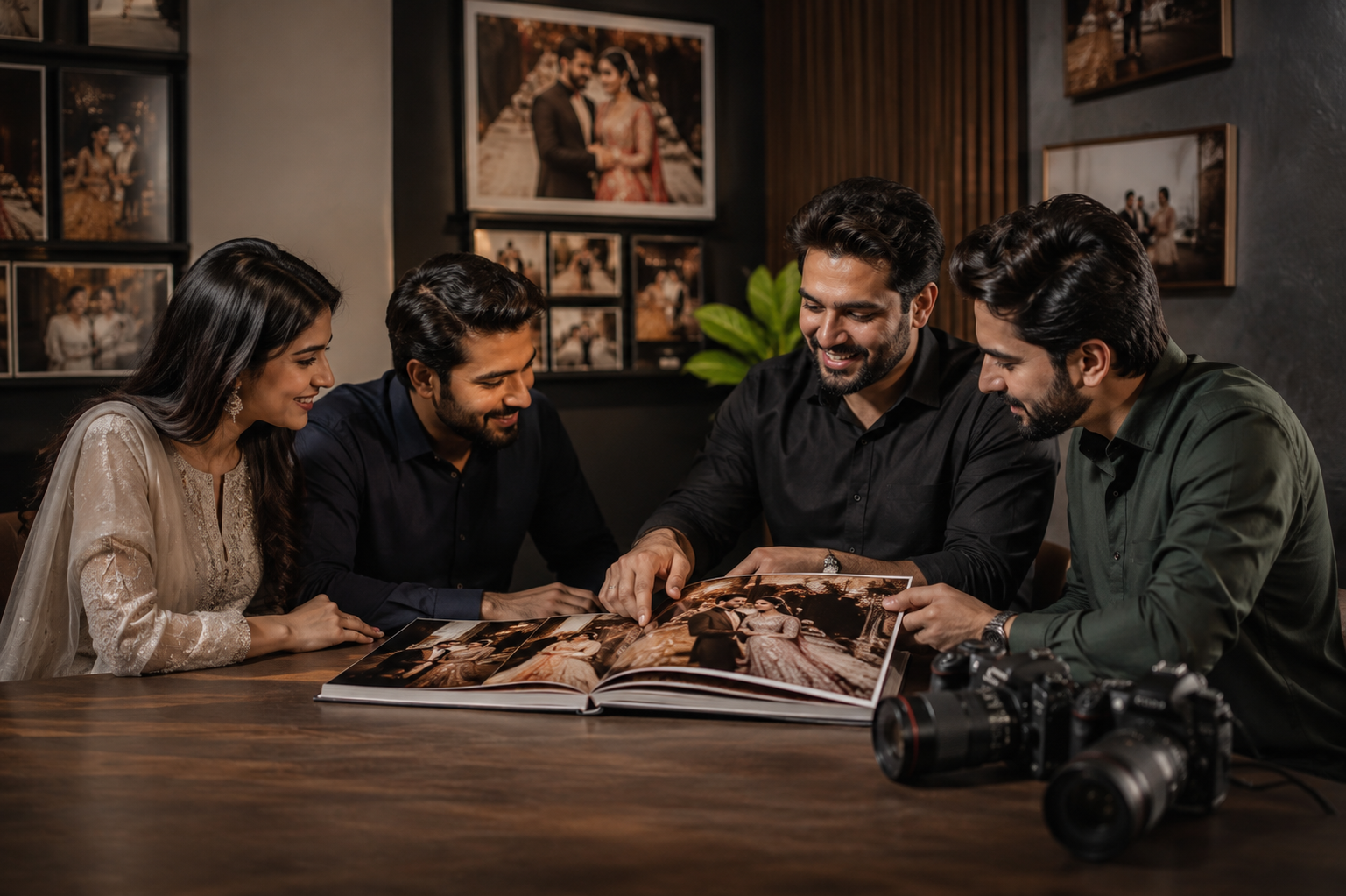
Couples in Islamabad and Rawalpindi often ask for a “cinematic, classy, candid, traditional” wedding. Those words can describe four different products. Visual style is not a preset you apply at the end. It is a set of decisions about posing versus observation, colour versus contrast, and how much the crew directs the room. If you choose that set before you pay an advance, your photographs and film will feel like one story. If you do not, you may receive a glossy trailer, a flat documentary, and an album that disagrees with both.
This guide helps you name the look you actually want, match it to Pakistani venues and family culture, and brief a studio with references that help instead of confuse.
Visual style is a decision, not a filter
A filter can warm a sky. It cannot invent access, calm, or time. A documentary team needs room to watch. An editorial team needs a few minutes of cooperation and cleaner light. A cinematic film team needs lanes for movement and a lighting plan. Traditional posed coverage needs a coordinator and a list. When a package claims to be all of these at once with one photographer and no timeline, something will be a compromise. That is fine—if you choose the compromise on purpose.
Start by ranking what you will still care about in ten years. Some families want every aunt in a formal set. Some couples want a short film they will actually rewatch. Some want both, which usually means more crew and clearer time blocks, not a cheaper bundle.
Four useful buckets (they can mix, but name the lead)
Documentary / photojournalistic
The crew observes: getting ready, rituals, guest reaction, the messy in-between. Posing is light. This style suits home mehndis and families who dislike being arranged. It needs access and patience. It is weaker if your relatives expect catalogue-style group shots and nobody is assigned to gather them.
Editorial / portrait-led
The couple is directed into stronger frames: architecture, gardens, hotel corridors, controlled light. This looks premium in albums and on walls. It needs a protected portrait window and outfits that can handle a few extra minutes. It fails when that window is promised “after dinner.”
Cinematic (motion-first)
The day is treated as scenes: anticipation, ritual, procession energy, quiet. Lighting, sound, and pacing matter as much as pretty clips. A 60-second reel is not a cinematic film. If cinema is your lead, say so, and staff the day accordingly. Read cinematic lighting techniques so the look you want is possible in your actual halls.
Traditional posed
Stage sets, family pyramids, and classic couple stands. This is still important in many Pakistani families. It is a craft when it is organised; it is chaos when it is not. Combine it with documentary coverage by giving formals their own 15–25 minutes instead of interrupting every dance.
Pick a lead style and a secondary style. “Documentary lead, editorial portraits, limited formals” is a brief. “Do everything, make it viral” is not.
Colour and contrast: natural, filmic, or high-drama
Style also lives in colour. Natural keeps skin believable and venues close to how they felt. Filmic often lifts shadows a little, rolls off highlights, and adds a gentle grade so halls feel rich without turning uncles orange. High-drama crushes blacks, saturates reds and teals, and can look striking on a teaser—and exhausting across a 200-page album or an elder’s portrait.
Ask to see a complete wedding in the grade you like, not three hero images. Look at indoor banquet skin, outdoor noon, and gold embroidery. If the indoor files look like a different studio from the garden files, the “style” may just be whatever the camera did that hour.
If you cannot describe the look without naming an app, you do not have a style yet. You have a mood. Moods are a start; deliverables need more.
Match the look to venue, attire, and family culture
A foggy winter Nikah in a quiet Islamabad mosque asks for a different visual language than a neon mehndi in a Rawalpindi lawn. Bright yellows and oranges can own a mehndi chapter; ivory and gold barat formals may need their own colour chapter so the album does not clash. Hill-station or northern outdoor segments can carry more landscape and backlight; windowless halls cannot fake that look with a preset.
Family culture matters. If elders expect dignified posed portraits, a purely chaotic documentary set will feel disrespectful no matter how fashionable it is on Instagram. If the couple wants almost no posing, a studio that only produces catalogue stands will frustrate you. Say this out loud. A good crew can mix; they cannot read minds during a baraat.
Attire is part of the grade. Heavy mirror work and saturated lehengas bounce colour. Share palettes. If you want natural skin, lighting and wardrobe have to cooperate—see both the planning tips and venue lighting notes in our other guides.
How to brief a studio with references that help
Send three to five references and label what you like in each: “the quiet getting-ready,” “the colour of the hall, not the posing,” “the film pacing,” “the way groups are arranged.” Do not send twenty conflicting Pinterest boards. If a reference was shot at sunset on a beach and your walima is a windowless hall, say you like the emotion or the colour, not the location.
Ask what the arriving crew actually shoots. A brand page is not a person. Confirm who leads, how many photographers and cinematographers attend each day, and whether female crew are available for private mehndi spaces. Style dies when the people who made the portfolio are not the people in the room.
- Lead style + secondary style, in one sentence
- Colour preference: natural / filmic / dramatic
- Must-have formals versus must-have candid chapters
- What may go on Instagram versus what stays private
- Whether photos and film should share the same grade
Keep photographs and films in the same world
Nothing breaks a wedding story like stills that are warm and creamy while the film is cold and crunchy—or the reverse. If one studio handles both, insist they share a colour pipeline. If you hire separate vendors, introduce them and send the same references to both. Agree when flash pauses so cinema stays clean. Agree whether social teasers can be punchier than the heirloom album; many couples like a stronger reel and a gentler book.
Albums need breathing room. A high-drama grade that thrills in a 45-second edit can feel heavy on every spread. Decide whether the album is couple-first or family-documentary. That single preference shapes sequencing more than any template.
Red flags when “style” is only marketing
- Only three hero images, no full wedding galleries from getting ready to rukhsati
- No films longer than a reel, if you asked for cinema
- No venues that resemble yours (ballrooms, banquet halls, homes)
- Slow or vague answers about crew, overtime, and who shows up
- A promise of every style at the cheapest number
Study complete stories. Look for consistent skin, respectful coverage of gendered spaces, and formals that look organised rather than panicked. Then book early—peak spring and winter seasons in the twin cities fill for a reason.
When you can name a lead style, a colour approach, and a portrait window, you are ready to enquire with a real brief. Explore related guides on choosing a wedding photographer in Islamabad, then compare crew counts on our services page when you want numbers attached to the look you chose.