Cinematic wedding films are often described as a camera and a colour grade. In Pakistani banquet halls, they are mostly a lighting problem. Saturated LED walls, mirrored stages, mixed tungsten sconces, sudden blackouts for entrances, and the jump from blue winter dusk into a gold ballroom can make skin look sickly or plastic if the crew is guessing. This article explains how professional cinematographers shape light on real Islamabad and Rawalpindi wedding days—and what couples and planners can do so the film still feels like cinema instead of a bright event tape.
You do not need to become a gaffer. You do need a vocabulary so you can brief a filmmaker, ask a venue the right questions, and understand why “no extra lights” is rarely a kindness to the final edit.
Why wedding cinema lives or dies on light
Photography can freeze a face with a short pulse of flash. Video has to live in the light that already exists, plus whatever continuous sources the crew is allowed to add. If the stage is teal and magenta, the camera will record teal and magenta on foreheads. If the hall is dim, the filmmaker either raises ISO (grain, muddy colour) or adds soft continuous light (more control, more gear, more coordination with the photographer).
Good cinematic lighting is usually invisible to guests. Bad lighting is very visible in the film: green skin, blown highlights on sequins, and faces that change colour every time someone walks under a different LED panel. The craft is deciding what to control and what to let feel like the room.
Read the light you already have
Arrive early—this applies to your crew, and it should apply to your planner’s walkthrough. White-balance under house light and again under stage wash. They are often two different worlds. Note ceiling colour: many Rawalpindi halls have dark wood or fabric that swallows bounce; some Islamabad hotels offer higher white surfaces but aggressive colour on the stage.
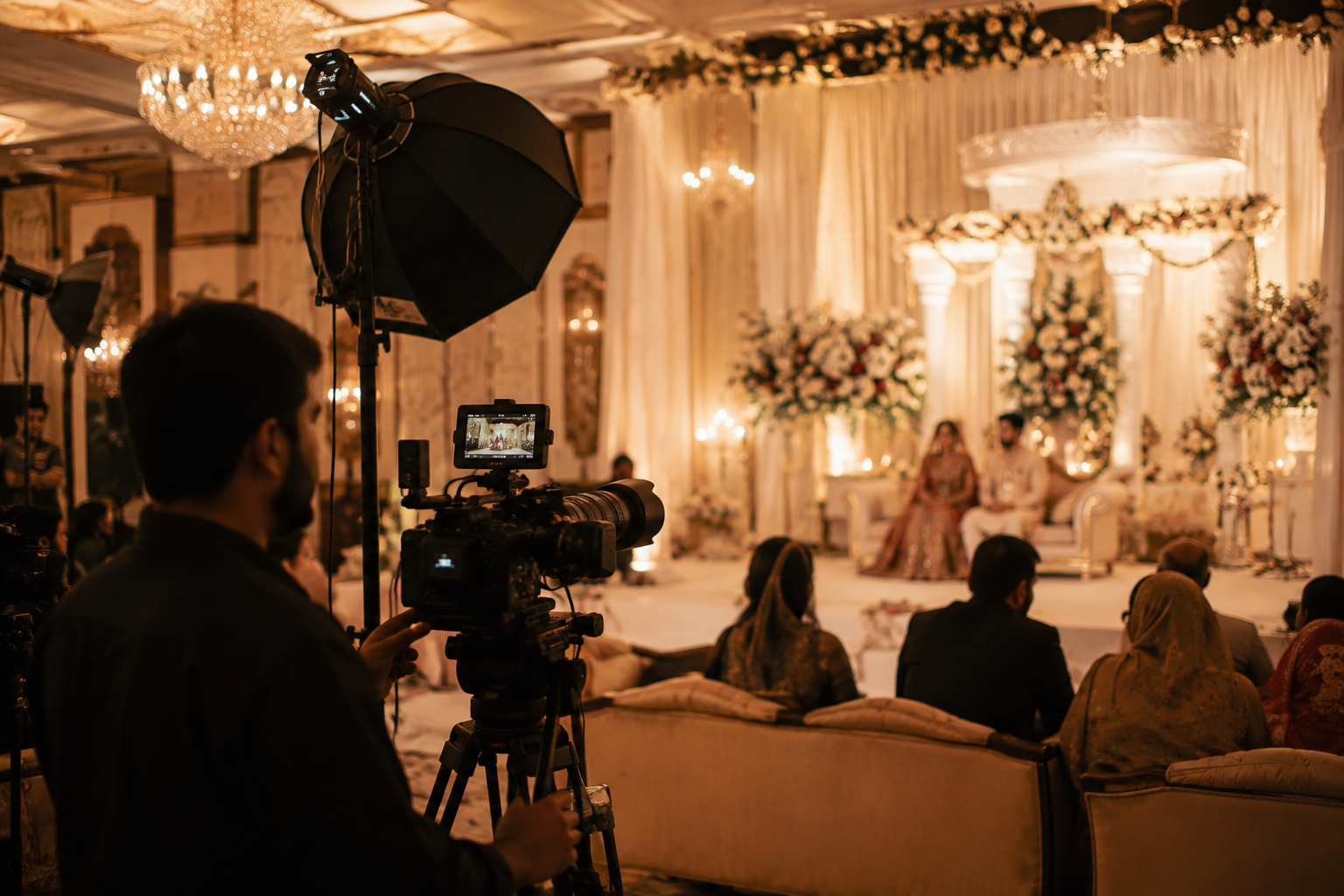
Look for practicals: lamps, candles, fairy lights, architectural coves. These become motivated sources in a film—light that appears to come from the room, not from a panel at the edge of frame. Also look for disaster zones: mirrored stages that throw colour onto faces, pin-spots that laser eyes, and blackouts timed to music drops. Those blackouts can be beautiful for an entrance if the filmmaker is ready, and useless if the only light left is a phone torch from the front row.
- House lights: warm, cool, or already dimmed to nearly off?
- Stage LEDs: static colour or chasing programs during dances?
- Windows: usable at golden hour, or covered for the whole event?
- Ceilings: bounceable, or dark and low?
Key, fill, and practicals—without turning the hall into a studio
A simple cinematic approach uses a key (main light on the couple), a weaker fill so eye sockets do not go black, and the venue’s own practicals as background colour. For portraits and vows, a small LED panel with soft diffusion off to one side often beats a flat on-camera light that makes everyone look like a press conference.
For dances and reportage, many crews ride higher ISO with fast cinema primes and keep extra lights off the floor so guests can move. The mistake is mixing both styles randomly: a soft key for one shot, then harsh on-camera LED for the next, then no plan when the DJ paints the room purple. Pick a priority for each block of the evening—accurate skin for formals, atmosphere for the party—and stick to it long enough for the edit to feel intentional.
Coordinate with stills photographers. Continuous LED supports video; short-duration flash supports stills but can strobe into slow-motion frames. Agree on “no flash” windows for cinematic entrances. That single conversation is worth more than any plugin in post-production.
Colour temperature, LED walls, and skin
Colour temperature is the warmth or coolness of light, measured in kelvin. A tungsten sconce might sit near 3200K; a daylight-balanced panel near 5600K; a teal LED wall is not a temperature so much as a colour cast. When those sources mix, cameras struggle. Skin can go magenta, green, or grey even if everyone looked fine to the eye.
Professionals pick a hero source. For couple close-ups, that is usually a skin-friendly key, with the wild stage colour allowed to live in the background. For wide shots, they may embrace the venue’s colour so the film feels like that night, not a corrected studio. Couples who want “natural skin, rich venue” should say those words in the brief. It is a lighting and grading choice, not a default.
Deep reds, golds, and heavy mirror work on outfits bounce coloured light back into faces. Share outfit palettes in advance. If the mehndi is neon and the barat is ivory and gold, the lighting kit and white-balance plan should change between days—not stay locked to one Instagram LUT.
Movement: gimbals, available light, and when to lock off
Gimbal moves look expensive until the light is ugly; then they look like expensive ugly. Smooth movement needs enough even illumination that exposure does not pump up and down as the operator walks from a dark aisle into a bright stage. If the hall is a patchwork of spots, locked-off tripod shots and slower push-ins often feel more cinematic than constant roaming.
Detail inserts—rings, décor, hands, food—can be lit with a tiny practical or a dim panel. These shots glue a film together and they do not require blasting the dance floor. Give the cinema team ten minutes before doors open. That quiet window is where a lot of “cinematic” texture actually comes from.
Outdoor baraats versus indoor halls
Winter baraats in the twin cities often start in cold blue dusk and end in a warm gold hall. That is a full stop-change in colour and exposure. Crews carry gels or dual lighting profiles and look for a side corridor for a short couple beat with cleaner light than the main stage. Summer days bring harsh overhead sun on white concrete and marble. Open shade, careful backlight, and shorter posing protect eyes and skin texture.
If your mehndi is a garden and your barat is a windowless banquet, say so. The kit bag is different. “Natural light only” is advice that dies at sunset in most Pakistani reception venues. For indoor stills strategy that pairs with this film craft, see our notes on lighting indoor wedding venues.
What couples and planners can request from the venue
You have more leverage than you think, especially if you ask a week ahead rather than during the entrance:
- Can coloured stage washes be softened or set to warm white during formals and speeches?
- Can house lights stay at a usable level until the first dance?
- Is there a side room or corridor for five to eight minutes of couple coverage?
- Are extra LED panels, light stands, or a small tripod allowed?
- Will the DJ run a programmed colour chase during vows? (Ask them not to.)
None of this makes the party less fun. It makes faces readable. Guests remember the energy; they also notice when the film looks like a nightclub security camera.
A lighting brief you can send your filmmaker
- List venues and whether each block is outdoor, mixed, or fully indoor.
- Describe the look you want in one sentence: “Natural skin, venue colour in the background,” or “Moody and dramatic, still flattering on elders.”
- Share décor lighting plans and outfit colours.
- Mark must-have cinematic moments (entrance, vows, rukhsati, speeches) and whether flash should pause.
- Say if the film will play at walima—brightness and runtime matter for projection.
Honest lighting beats promised cinema. A filmmaker who explains what a hall will actually look like is more useful than one who only sends drone stills from someone else’s weather.
If you want the wider planning context—timelines, crew, and family roles—start with wedding photography planning tips. Style and colour grade belong in a separate conversation; choosing a visual style will help you pick a look that lighting can actually support on the night.